MONTENEGRO
Montenegro is a country in Southeastern Europe.
It is located on the Adriatic Sea and is a part of the Balkans, sharing borders with Serbia to the northeast,
Bosnia and Herzegovina to the north and west, Albania to the southeast, and the Adriatic Sea and Croatia to the southwest.
Podgorica, the capital and largest city, covers 10.4% of Montenegro’s territory, and is home to roughly 30% of its total population.
Area : 13 812 km²
Population : 661807 (2011 census)
Currency : EURO (since 2002)
PARLIAMENTARY REPUBLIC (independent since 2006)
Prime minister : Mr Milo Djukaovic, architect of the separation with Serbia, and a strong advocate of the country’s integration in the European Union.
President : Mr Filip Vujanovic.
ECONOMIC ACTIVITY
Tourism and services are representing 66 % of the PIB with a 10% annual growth of its
visitors (about 1,2 million visitors representing a financial result of 500 million euros in 2009 )
Member of the OECD zone since 2008.
QUALITY OF LIFE
Low revenues (minimal wage is about 450€/month), but prices for lands located on the seashore can rise up to 350€/m2.
TAX
19% VAT
FEATURE
Montenegro is with no doubt the only country of the world that wrote Ecology in its
constitution. However, the practical application of ecology can still be improved.
CLIMATE
Mediterranean climate on the coast,132 days of with a temperature higher than 25° C.
GEOGRAPHY
The « Black Moutain » (highest point is the Roháčka, 1,029 m n.m.) ending in the Adriatic Sea.
SEISMIC AREA
Several earthquakes that had devastated the region, the last one happened the 18th April 1979 (8 on the Richter Scale) and destroyed 70% of Kotor’s buildings, buildings rebuild with the help of UNESCO. Strict seismic rules have to be indispensably complied.
RELIGIONS
Orthodoxe (Montenegrins, Serbians) : 80%
Muslims (Albanians, Bosnians) : 15 %
Catholics (Croats) : 5 %
LANGUAGE
Serbo-croatian. Traffic signs are written with latin and in cyrillic characters.
LEGAL
Montenegro’s justice is by constitution independent from the government. As a result of the nationalisations conducted during the communist period (Tito), many individual filed a request to the administrative court, in major cases restored their properties without the government’s opposition.
Deeded agreements are established by a lawyer’s office who make them register and validate by the administrative court in exchange of a small 2% royalty. Lawyers fees rarely exceed 1% of the amount of the transaction.
REAL ESTATE
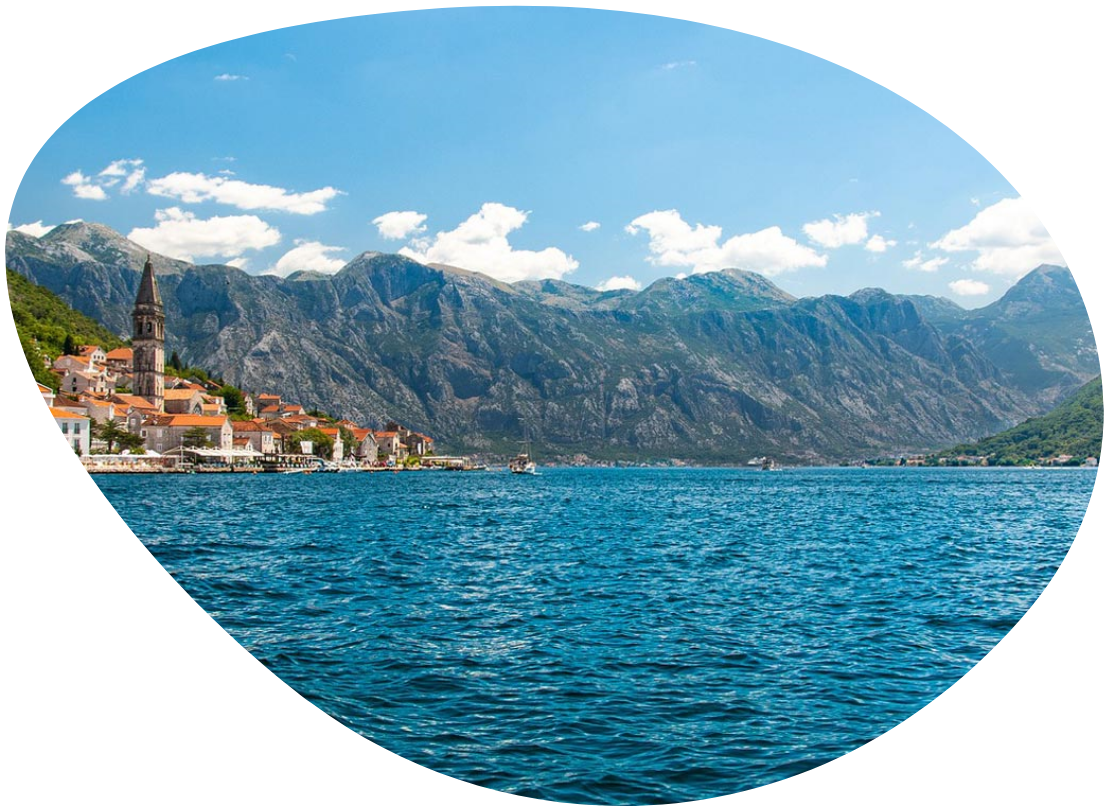
Prices on the coast are very high in regard of the population’s revenues. High prices had been registered for the Porto Montenegro facilites with prices rising up to 12000€/m2. High prices also had been registered in Perast or Tivat, for houses near the seaside.
Reasons for this passion can be explained by :
– The low geographic density for buildable areas on the coast.
– The bay of Kotor appeal, a true haven of peace.
– The appeal of the Dalmete coast in general.
– The low taxes on revenues (a maximum of 9%), allowing significant returns on investment.